Somewhere over the Pacific right now, a plane is taxiing toward a gate while a Sunset Music track hums quietly under the boarding announcements. Nobody in that cabin knows it. That’s the job. Good background music disappears into the moment it’s supporting, and that invisibility is exactly why the partnerships behind it deserve a closer look.
We’ve spent the last several months building out a genuinely global footprint for the artists and writers we represent, and the newest additions to that network stretch from Beijing to the in-flight entertainment system on one of the world’s largest airlines. None of these deals happened by accident. Each one required a different kind of relationship, a different licensing structure, and in some cases, a completely different legal framework than the one governing a typical American sync deal. We think our roster deserves to understand exactly how their music travels once it leaves our hands, so here’s the full picture.
Start in China, because the sheer scale of that market tends to surprise people who haven’t looked closely at it before. China is now the world’s fifth largest music market, home to well over a billion potential listeners, and getting a foothold there has historically meant navigating a regulatory and cultural landscape that looks almost nothing like licensing in the West. Coolvox has built its entire business around solving exactly that problem, operating as one of the country’s leading music licensing and distribution platforms, and Coolvox is the dedicated stock marketplace that runs specifically for clients who need music for audio and video productions inside China. Millions of tracks already sit in that catalog, and Kanjian keeps expanding it, adding fresh material to keep pace with a domestic audience whose taste moves fast. For our artists, a Coolvox placement means their work becomes available to Chinese content creators, broadcasters, advertisers, and production companies who are actively hunting for exactly the kind of premium, well produced recordings that fit their market. It’s a door that very few Western catalogs manage to walk through cleanly, and we walked through it deliberately.
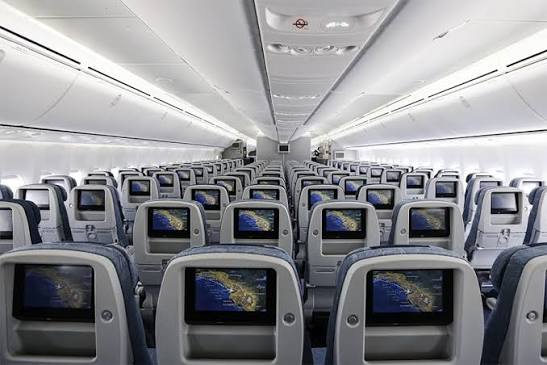
From there, the story goes airborne. We’re proud to share that Sunset Music tracks have cleared approval for use in Air China’s in-flight entertainment system, which sounds like a small thing until you consider what it actually involves. Airline sync deals are their own peculiar category of licensing, built around a handful of very specific use cases rather than the open ended placements you’d see in film or television. Music approved for this kind of deal tends to loop quietly during boarding and deplaning, sit underneath the ambient safety video that plays before every takeoff, or appear as featured programming inside the aircraft’s internal entertainment and radio channels. It’s a captive audience in the most literal sense of the phrase, millions of travelers a year, and it’s a placement type that rewards music built to feel calm, polished, and unobtrusive rather than attention grabbing.
MediaNet belongs in this same conversation, even though it works nothing like a consumer facing platform. Picture it less as a storefront and more as plumbing. MediaNet operates purely as backend infrastructure, one of the largest business to business digital music platforms in the world, and when a track gets ingested into its system, that track becomes instantly available to license across hundreds of downstream commercial clients simultaneously. Fitness apps building workout playlists, in store radio networks piping music through retail chains, international streaming services, institutional players installed in hotels and offices, all of them draw from the same underlying MediaNet catalog rather than negotiating separately with individual rights holders. For an independent artist, that kind of pickup is close to the platonic ideal of passive global distribution. The track gets cleared once, metadata mapped correctly once, and then it sits ready to generate mechanical and performance royalties every single time one of those hundreds of clients streams or broadcasts it, without anyone on our end having to lift a finger for each individual use.
Then there’s the relationship that took the longest to build and honestly might be the most interesting one on this list: the pipeline connecting our catalog to Visual China Group. VCG is often described as the Getty Images of China, and that comparison undersells it a little. Founded in 2000, the company now manages more than 700 million digital assets, spanning stock photography, illustration, 3D design, and a rapidly growing library of video and commercial background music, and it controls something in the neighborhood of sixty percent of the entire visual content licensing market inside mainland China. That is not a niche player. That is the default supplier for a huge share of the country’s tech giants, ad agencies, and corporate media teams. We don’t have a direct line into VCG ourselves, and honestly, almost nobody does. The connection runs through That Pitch, the distribution service we work with that takes copyright cleared tracks from independent musicians and syndicates them across more than a hundred sync libraries, sub-libraries, and multimedia agencies worldwide. VCG is one of the major international clients that licenses directly from that syndicated pool to fill its own stock music and commercial video needs, which means a Sunset Music track can end up scoring Chinese corporate media without a single direct conversation ever happening between us and VCG. That’s the whole appeal of this kind of infrastructure. It multiplies reach without multiplying paperwork.
The same distribution pipeline is also how our music has found its way into Canva’s official commercial audio library, and this one is worth sitting with for a second, because the scale is almost hard to process. Canva has more than a hundred and eighty million active users creating content every single day, and a huge percentage of them are not professional editors or trained musicians. They’re small business owners, social media managers, students, side hustlers, people who just need a clean video for a product launch or a birthday post. When one of those users clicks the audio tab inside Canva and searches by mood or genre, upbeat indie rock, chill lo-fi, whatever fits the moment, our catalog is sitting right there in the results. From there the track might end up behind an Instagram Reel, a TikTok, a YouTube Short, a LinkedIn video ad, or tucked quietly into the background of a corporate pitch deck or an internal training video nobody outside the company will ever see. It’s not a movie trailer or a national commercial, and it doesn’t need to be. Volume like that adds up on its own, one small creative project at a time, across a user base larger than most countries.
[Insert your own story here about the first time you heard one of your tracks pop up somewhere completely unexpected]
That’s the strategic side of things. Now, the part that actually pays the bills day to day: what’s currently open for submission.
A film client is looking for something loud and confident right now, an end credits track for a family movie that needs real female empowerment energy running through it. They want upbeat, contemporary pop, alternative, indie, or rock, something with playful attitude that still keeps the lyrics clean enough for a younger audience. Confidence, resilience, self acceptance, owning who you are, that’s the emotional territory. Demi Lovato’s Confident got name checked as a useful reference point for the tone they’re chasing, fast paced and built with enough variation to keep a distracted viewer’s ear engaged all the way through the credits roll. That one closes on August tenth.
A luxury brand wants the opposite kind of energy for a perfume campaign, something slick and electronic with a clear generational lean toward Gen Z. The brief is specific about wanting a moment, an obvious shift in energy, a lift, a drop, something that lands the instant the perfume hits the air in the commercial’s visual and the surrounding scene transforms. Overmono’s Good Lies came up as a sonic reference for that kind of tonal pivot. Submissions close August seventeenth.
A separate online advertising campaign wants a pure pop earworm, something built entirely around one unavoidable hook. The brief calls for imaginative, driving rhythm work, modern polished production, and lyrics that stay a hundred percent happy and clean, no edge, no subtext, just genuine feel good energy. They pointed to Addison Rae’s Headphones On as the kind of track they’re picturing, and they explicitly want something recent rather than a deep cut. That window runs through August twenty fourth.
And finally, a period romance is looking for a trailer track that grows the way its central love story does, starting small and acoustic before orchestral elements build it into something much bigger by the end. Because the series is set in the past, the brief specifically wants organic instrumentation rather than anything that reads as modern or overproduced, since that would clash with the visuals. Harry Styles’s Coming Up Roses was offered as a reference for the emotional arc they’re after, longing that builds into something genuinely dramatic. That brief has the earliest deadline of the four, closing August third.
Four very different moods, four very different audiences, and all four represent exactly the kind of opportunity our newest distribution partnerships exist to catch. A track that lands one of these placements today could just as easily surface behind a Canva video next month or loop quietly through an Air China cabin next year. That’s the whole point of building a network this wide. You never know exactly which door a song is going to walk through next, and honestly, that’s the fun part of this job.
Placements.
This week’s sync requests, sorted by deadline. Read the brief, hit the reference, apply before the counter runs out.