The Aisle Is the New Airwaves
Every store, gym and café with speakers is a broadcast channel. For songwriters and artists, landing on in-store playlists can mean millions of new listeners, real discovery and royalties that keep coming long after release day.
Most listeners never think of a clothing store as a radio station, but that is exactly what it has become. Walk into a fashion retailer on a busy Saturday, step onto a treadmill at a crowded gym or wait in line for a flat white, and you are hearing a carefully programmed broadcast, chosen to match a brand’s identity, the time of day and the mood of the people inside. Those playlists run for hours on end, repeat across hundreds of locations and reach an audience that no single radio station could ever assemble. For songwriters, artists and catalog owners, they represent one of the most underappreciated opportunities in modern music, a channel that delivers new listeners, measurable discovery and a steady flow of royalties.
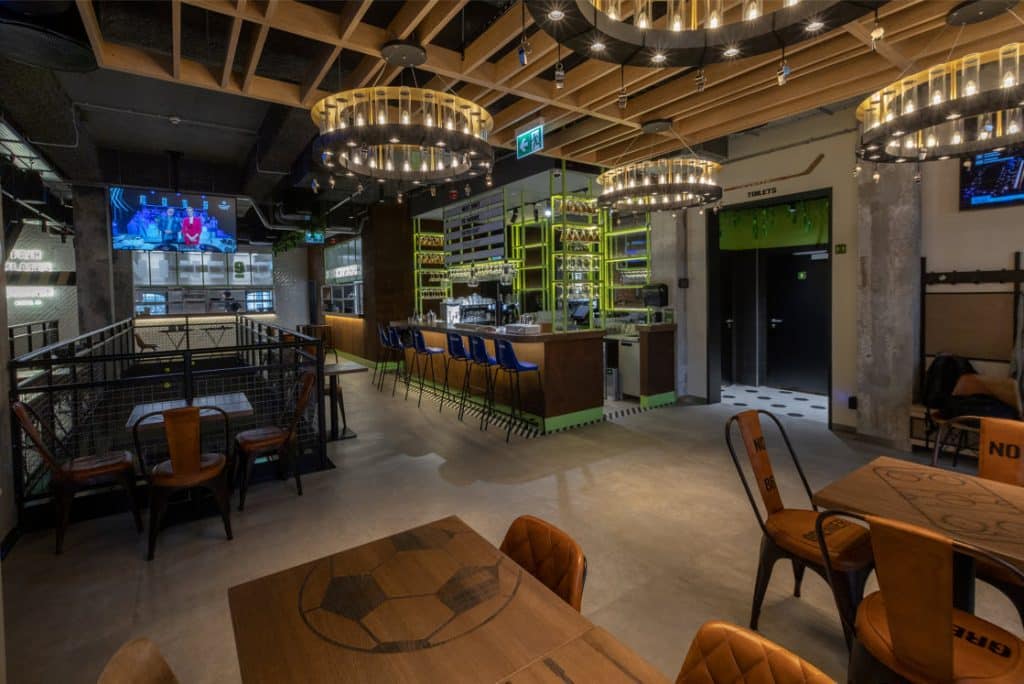
At Sunset Music, we believe in-store placement deserves a central place in every serious music strategy. Once a track secures a broadcast placement, it can enter frequent circulation in the kinds of environments where people spend real time and real money, from fashion names such as New Look, Oasis, FatFace and Alexander McQueen to destinations like Harrods, fitness chains like PureGym, coffee houses like Costa and premium showrooms like Jaguar. Shoppers in those spaces hear the music while they browse, train and relax, and a meaningful share of them reach for their phones to find out what they are listening to. Combined with that discovery, the placement becomes a form of airplay promotion that works quietly, continuously and at scale.
Why Brands Treat Sound as Strategy
Retailers do not choose music at random. Decades of research have shown that background music shapes how customers feel, how long they stay and what they buy. One of the most cited early experiments, conducted in a New York grocery store in 1982, found that slower music led shoppers to spend more time in the aisles and lifted overall sales compared with faster tempos. Studies since then have consistently found that music influences dwell time, willingness to spend and the overall perception of a store, particularly in fashion retail, where genre, tempo and familiarity help define a brand’s personality. Recent industry research has linked well-chosen background music to sales increases of up to 8 percent, while surveys of shoppers show that poor audio choices can drive customers out the door.
That is why the world’s leading retailers, gyms, hotels and hospitality groups invest in professional music programming. A luxury department store wants a soundtrack that feels refined and confident. A fitness chain wants tempo and energy that keep members moving. A coffee brand wants warmth and familiarity that invite people to linger over a second cup. Each of those goals creates demand for songs that fit, and every track selected for those playlists becomes part of a brand’s identity, heard by thousands of people every single day.
A song in heavy in-store rotation is heard by more people in a week than many records reach in a year of streaming.
Sunset Music AdvocacyFrom Background to Discovery
The single most important change in how in-store music works is the smartphone. A decade or two ago, a shopper who liked a song playing overhead had little chance of identifying it. Today, the answer is a few seconds away. Shazam, which launched in the United Kingdom in 2002 as a text message service and was acquired by Apple in 2018, has surpassed 100 billion song recognitions, roughly a dozen for every person on the planet. A great deal of that activity happens in exactly the places where in-store playlists run: shops, cafés, gyms, restaurants and hotel lobbies.
Every one of those identifications is a moment of discovery that can turn a passive listener into a fan. A shopper who tags a song can save it to a streaming library, follow the artist and return to the music again and again, generating additional streams and royalties long after leaving the store. Shazam activity is also closely watched across the industry as an early signal of audience interest, which means a song that keeps getting tagged in stores can attract attention from playlist curators, radio programmers and music supervisors. In that sense, in-store placement is not simply background exposure. It is an engine for the kind of organic, listener-led discovery that money cannot easily buy.
How In-Store Play Turns Into Royalties
Discovery is only part of the value. When music is played publicly in a commercial setting, the people who created it are entitled to be paid. In the United Kingdom, businesses that play recorded music for customers or staff generally need TheMusicLicence, issued by PPL PRS, a joint venture equally owned by PPL and PRS for Music that has offered a single combined licence since 2018. That one licence covers two distinct rights. PRS for Music collects on behalf of songwriters, composers and music publishers for the composition itself, while PPL collects on behalf of record labels and performers for the specific recording being played. A single song spinning in a shop can therefore generate income for both the people who wrote it and the people who recorded it.
Similar systems operate around the world. In the United States, performing rights organizations license public performances of musical works and distribute royalties to their songwriter and publisher members, and comparable societies across Europe, Latin America and Asia do the same. Because in-store playlists repeat across many locations and run for long hours, a well-placed track can accumulate a substantial number of public performances, and those performances add up to income that continues for as long as the song stays in rotation.
What It Takes to Earn a Placement
In-store programming is a curated environment, and the songs that earn a place in it share a few qualities. They suit the brand, matching its tone, its audience and its aspirations. They fit the daypart, since the music that opens a store on a quiet Tuesday morning is rarely the music that powers a packed Saturday afternoon. They are clean and broadcast ready, typically free of explicit lyrics and mastered to sit comfortably at the volumes used in public spaces. And they are professionally presented, with complete metadata, accurate credits and clear ownership so that every play can be identified and paid.
That last point deserves emphasis. A placement only pays if the music is properly registered. Songwriters and publishers need their compositions registered with their performing rights society, and the owners of the recordings need them registered with the appropriate neighbouring rights organization, such as PPL in the United Kingdom. Standard identifiers, accurate splits and consistent artist names make the difference between royalties that arrive and royalties that are lost in the system. For catalog owners, this is also where the long tail comes to life. Older recordings, deep album cuts and genre collections that rarely surface on algorithmic playlists can find a second life in environments that value mood, consistency and quality over novelty.
A placement only pays if the music is ready to be paid. Registration and clean metadata are what turn a play into a royalty.
Sunset Music AdvocacyOne Song, Many Rooms
Part of what makes in-store broadcasting so powerful is its range. A single track can serve very different environments depending on its character. A bright, mid-tempo pop record might anchor a fashion chain’s afternoon playlist, while a driving electronic cut keeps the energy high on a gym floor across dozens of locations. A warm acoustic song can settle naturally into a café’s morning rotation, and a polished, atmospheric instrumental can set the tone in a luxury showroom where customers are weighing a major purchase. Hotels, restaurants, airports, salons and car dealerships all program music with the same care, and each represents another room where the right song can find an audience.
That diversity rewards creators who think about their music in terms of mood and setting as well as genre. Clean versions, extended edits and instrumental mixes give programmers more ways to use a recording, and a catalog with a consistent sound across many tracks is easier to build into a brand’s long-term rotation. The more ways a song can fit, the more places it can play, and the more places it plays, the more opportunities it creates for discovery and income.
Why Catalog Owners Should Pay Attention
The economics of in-store placement are especially attractive for anyone who owns or administers a catalog. Streaming algorithms tend to favor what is new and what is already popular, which leaves enormous numbers of excellent recordings underexposed. In-store programmers think differently. They look for songs that fit an atmosphere and hold up to repeated listening, and they value consistency, quality and character over chart position. A soul ballad from decades ago, a polished jazz standard, a vintage dance record or a laid back acoustic catalog can be exactly what a brand is searching for, and placement can turn a dormant asset into one that earns every day.
Because public performance royalties accrue each time a song is played in a licensed venue, catalog placements can also deliver unusually durable income. A track that becomes part of a brand’s core rotation may stay there for months or longer, generating plays across many locations without any additional marketing spend. Over time, that steady accumulation can meaningfully change the value of a catalog, which is why in-store broadcasting has become an important consideration for publishers, labels and rights holders who want every recording they control working as hard as possible.
A Smarter Kind of Airplay
For independent artists in particular, in-store placement answers a problem that has defined the streaming era. Terrestrial radio remains difficult to access, and the major editorial playlists are crowded and competitive. In-store broadcasting offers a different path, one built on fit and quality rather than marketing budgets. It reaches people in a relaxed, receptive frame of mind, it repeats often enough for a song to become familiar, and it connects directly to the tools listeners already use to discover and save music. The result is exposure that compounds over time, as each new placement introduces the music to another audience in another city.
For the brands, the benefit is a soundtrack that feels fresh and distinctive rather than a recycled list of the same hits heard everywhere else. For listeners, it is the pleasure of discovering something new while going about their day. And for the creators, it is a broader audience and an additional, durable source of royalty income. Few opportunities in music serve all three so well.
That is why Sunset Music treats in-store placement as an essential part of how we champion the songwriters and artists we work with. The modern listening landscape is no longer confined to headphones and car stereos. It lives in the shops, gyms, cafés and showrooms where people spend their days, and the songs that fill those spaces are building careers one shopper at a time. Landing your music on in-store playlists adds real value to your catalog, and in a market where every listener counts, it may be one of the smartest moves a creator can make.